
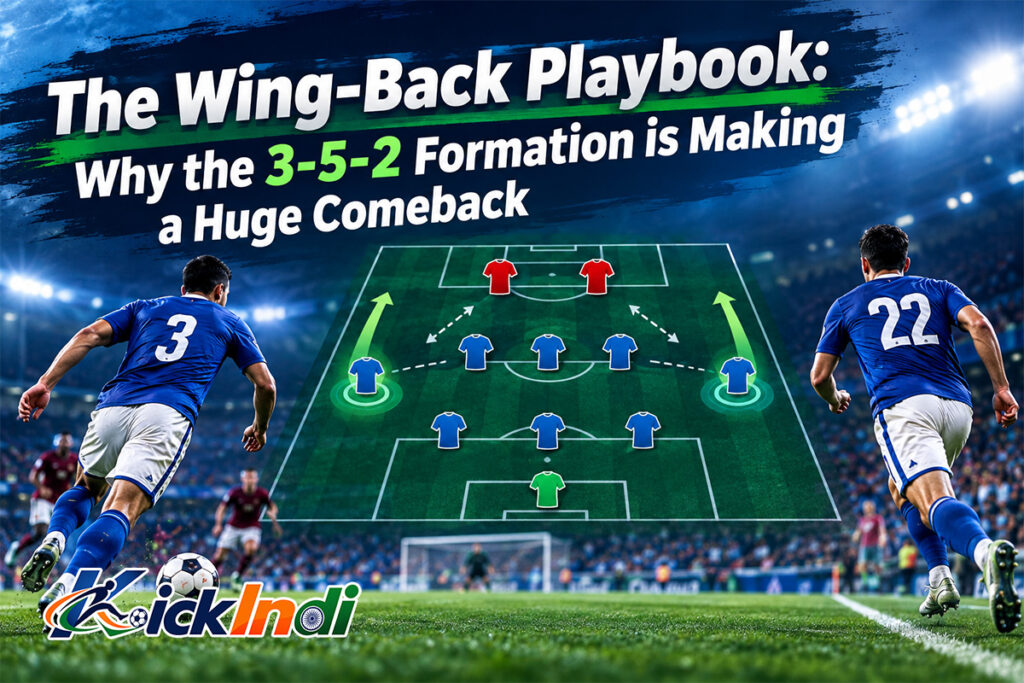
Introduction: The Tactical Evolution in Modern Football
The landscape of modern association football is in a state of constant tactical flux, where managers continuously seek innovative ways to break down low blocks and outnumber opponents in transitional phases. Recently, purists and tactical analysts across the Indian subcontinent and elite European leagues have witnessed a profound renaissance of a classic shape: the 3-5-2. Once considered too adventurous or defensively fragile by traditionalists, this formation has evolved into a sophisticated blueprint for modern dominance.
For passionate fans tuning into high-stakes fixtures, understanding the mechanics behind this system enhances the appreciation of the game. This comprehensive 3-5-2 formation tactical analysis and wing-back roles explores why top-tier managers are abandoning traditional back-fours in favor of a fluid, multi-layered tactical structure. By dissecting player responsibilities, positional rotations, and statistical output, we uncover the secrets driving this monumental tactical shift on the pitch.
The Strategic Shift: Why Managers Are Embracing the System
To understand the current footballing zeitgeist, one must examine why football teams are using the 3-5-2 formation again. In an era dominated by high-intensity gegenpressing and positional play, teams often struggle to secure central control while maintaining width. The modern 3-5-2 solves this dilemma by offering a numerical overload in the middle of the pitch while stretching the opponent’s defensive line horizontally.
From the Premier League to the Indian Super League (ISL), tacticians are recognizing that a three-man central defense provides absolute stability against two-striker systems, freeing up central midfielders to press higher up the pitch. Furthermore, the presence of dual central forwards pins opposing center-backs, preventing them from stepping out to intercept passes into midfield. This creates cascading spatial advantages across all three thirds of the pitch, making it an irresistible option for progressive managers.

Flank Dominance: The Engine Room of the System
At the heart of this tactical revival lies the evolution of wide players. How modern wing-backs dominate in a 3-5-2 tactical setup serves as the ultimate differentiator between a struggling side and a championship-winning outfit. Unlike traditional full-backs who primarily focus on containment before supporting attacks, the modern wing-back acts as both winger and defender, covering the entire flank single-handedly.
In possession, these athletes exploit the half-spaces, pinning opposition full-backs deep and creating a situational front five. Out of possession, they drop into a flat back-five, suffocating opposition wingers and neutralizing crosses.
Key Performance Metrics of Elite Wing-Backs
The following data table illustrates the statistical impact and workload distribution expected from elite wing-backs operating within a high-performing 3-5-2 framework:
| Performance Metric | Defensive Phase Expectation | Offensive Phase Expectation | Match Average Benchmark |
| Sprints / High-Intensity Runs | 35–45 per match | 45–60 per match | 80+ total high-intensity efforts |
| Crosses Completed | Positional recovery blocks | 4.5 successful crosses per 90 | 30% accuracy threshold |
| Duels Won (%) | 65% ground and aerial success | 50% offensive 1rd duels won | > 58% overall success rate |
| Recoveries & Interceptions | 7–10 ball recoveries | 3–5 counter-pressing wins | High defensive contribution |
This dual-threat capability forces opponents into difficult defensive dilemmas, frequently creating 2-on-1 situations against isolated opposition full-backs.

Tactical Breakdown: Anatomy of a Matchday Blueprint
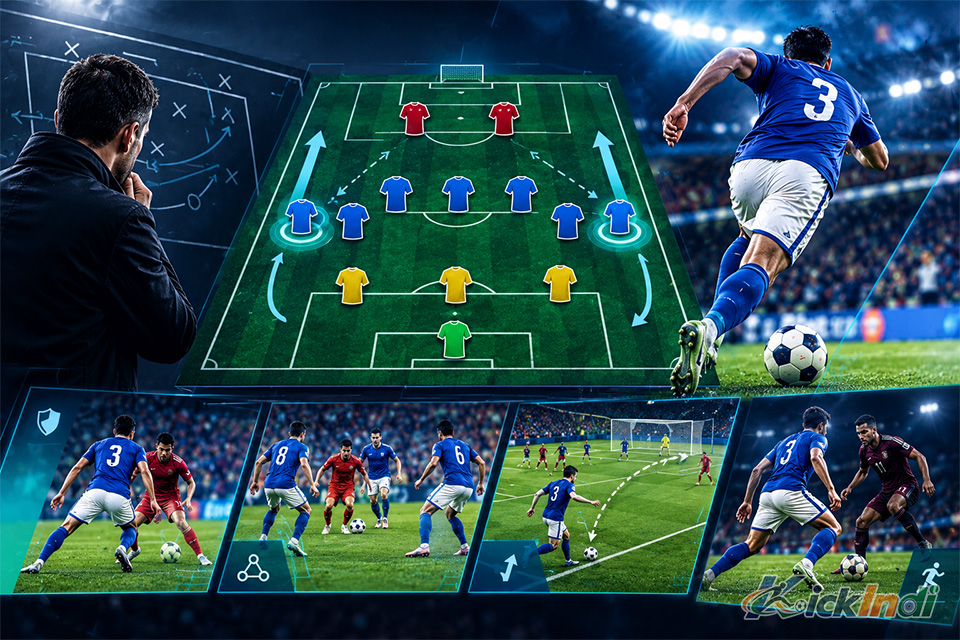
For analysts and coaches looking for a granular understanding, the best football tactics 3-5-2 formation breakdown for matches reveals a meticulously choreographed dance of space and time. When executing this framework, team coordination is divided into three distinct operational phases:
- Build-Up Phase (First Third): The central center-back acts as a ball-playing distributor, while the outer center-backs widen to create a passing triangle with the deep-lying playmaker and the goalkeeper. This forces the opponent’s pressing forwards into a narrow corridor, opening up progressive passing lanes.
- Progression Phase (Middle Third): Central midfielders rotate dynamically. One holding midfielder shields the defense while two central box-to-box runners attack the half-spaces, dragging opposition markers out of position and creating pockets for the strikers to drop into.
- Finishing Phase (Final Third): The weak-side wing-back aggressively attacks the far post, converting crosses delivered by their counterpart on the ball side. This creates an overwhelming numerical advantage inside the penalty box, often leaving defenders flat-footed.

Conclusion & Matchday Outlook
The resurgence of the 3-5-2 formation is far more than a passing tactical fad; it is a permanent evolution in how football matches are won through spatial dominance and physical endurance. As leagues worldwide continue to adopt these intricate blueprints, keeping a close eye on tactical nuances will elevate your matchday experience.
Stay tuned to KickIndi for real-time stats, expert match predictions, and deep-dive tactical breakdowns to keep you ahead of the game!Would you like me to generate a complementary SEO-optimized meta description or social media sharing snippet for this article?

 England

 Spain

 Italy

 Germany

 France

 Netherlands

 Portugal
 Brazil

 Belgium
the player needs to step up but tbh Central need a complete rebuild the player is overrated despite having more possession the player's stats have declined this season, maybe time for a new challenge Overrated league 😳
Future legend Quality football from both sides ngl Indian Super League never fails to deliver drama 📊