

Introduction: The Modern Football Tactical Dilemma
Football tactics are constantly evolving, and at the heart of modern strategy lies a perpetual debate: does a fluid attacking setup utilizing a playmaker out of position yield a higher return than a traditional focal point in the box? For Indian football fans and tactical analysts tracking global leagues like the English Premier League, La Liga, and the Indian Super League (ISL), understanding how formations translate into raw attacking output is crucial.
When evaluating team performance, pundits frequently look at False 9 vs traditional striker goal scoring statistics to determine which setup maximizes offensive efficiency. While traditional center-forwards have historically dominated scoring charts through pure physicality and positioning, the modern tactical revolution spearheaded by managers like Pep Guardiola has popularized the deep-lying forward. This comprehensive tactical breakdown explores how each system influences goal output, breaking down metrics, player roles, and strategic advantages for both domestic and international fixtures.
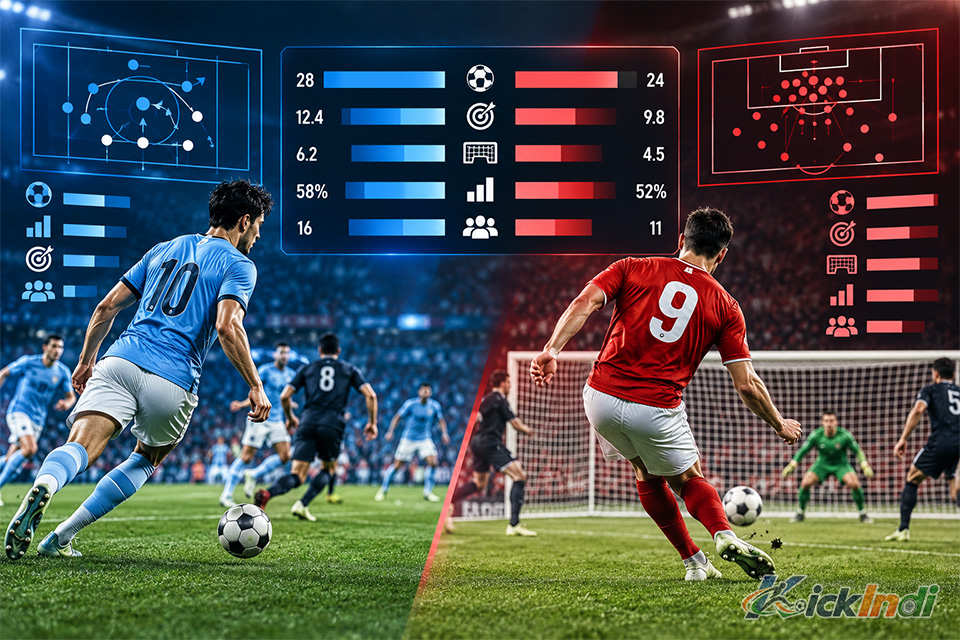
The Anatomy of the Traditional Striker System
The traditional number 9 is the classic reference point of an attack. Operating primarily on the shoulder of the last defender, this profile relies on aerial dominance, clinical finishing inside the 18-yard box, and physical hold-up play to bring wingers and midfielders into the game.
In leagues with high physical intensity, managers often debate whether this remains the best tactical system for more goals false 9 or striker. A traditional target man guarantees a constant physical presence, occupying two central defenders and creating space in the channels. When analyzing goal-scoring patterns, traditional setups typically generate higher volumes of headed goals, tap-ins from close range, and high-conversion percentages inside the penalty arc.
Furthermore, wingers and attacking midfielders often thrive in a traditional system because they benefit from the gravitational pull of the center-forward, who pins defenders deep and prevents them from stepping up to press the midfield.

Decoding the False 9: Fluidity, Space Creation, and Midfield Overloads
Conversely, the False 9 is an enigmatic tactical concept where a natural striker drops deep into the midfield space, drawing central defenders out of position and creating gaps for on-rushing wingers and box-to-box midfielders.
To fully understand this approach, one must examine how does a false 9 affect team goal scoring compared to a striker. Instead of relying on a single individual to score thirty goals a season, a False 9 system distributes goal-scoring responsibilities across the entire front three or four. By vacating the central defensive zone, the dropping forward creates numerical superiorities (overloads) in the central corridor.
| Tactical System | Primary Goal Source | Midfield Integration | Defensive Pressure |
| Traditional Striker | Center-forward (Box finishing) | Low to Moderate | Low (Static pressing) |
| False 9 System | Wingers & Midfielders (Late runs) | High (Constant overload) | High (Gegenpressing/Fluid press) |
As illustrated in the table above, the structural difference shifts the scoring burden from a lone focal point to dynamic, multi-directional runners attacking from deep.

Data-Driven Comparison and Tactical Output
When conducting a rigorous tactical analysis false 9 vs center forward goal output, the underlying data often reveals fascinating trends depending on the caliber of the opposition and the technical quality of the squad.
Teams utilizing a traditional striker often boast higher expected goals (xG) per shot ratios because their attempts originate closer to the goalmouth. However, sides employing a False 9 frequently generate a higher total volume of shots and superior possession metrics, which over the course of a long domestic season can translate into comparable or even superior overall goal tallies.
In high-stakes matches where low blocks are deployed by defensive opponents, the traditional striker can sometimes become isolated. In these scenarios, the False 9 excels by dragging center-backs out of their defensive lines, unlocking stubborn defences through quick interchanges and third-man runs.

Conclusion: Which System Reigns Supreme for Match Success?
Ultimately, neither system holds an absolute monopoly on goalscoring success. The choice between a False 9 and a traditional striker depends entirely on squad personnel, managerial philosophy, and matchday context. While traditional setups offer directness and clinical penalty-box presence, the False 9 delivers unmatched tactical fluidity and chance creation.
For football enthusiasts tracking matches, analyzing these tactical nuances adds profound depth to every fixture. Which tactical setup do you believe delivers better results for modern teams?




































 England

 Spain

 Italy

 Germany

 France

 Netherlands

 Portugal
 Brazil

 Belgium
📝 Squad player. The stats show the team are solid in possession but struggle to convert chances. Not bad... 📊
@BackHeelBob Indian Super League is always competitive Mid-table team compared to other leagues